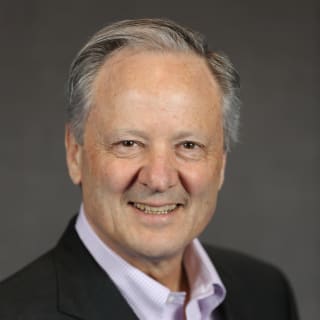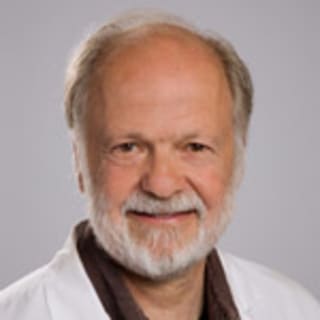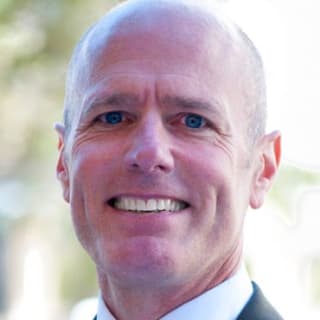
Stanley Thomas Carmichael MD MD, PhD (He/Him)
[Pronunciation: S Thomas Carmichael]
Neurorehabilitation
Professor and Chair, Neurology, UCLA School of Medicine
Join to View Full Profile
710 Westwood PlazaLos Angeles, CA 90095
Phone+1 310-206-9799
Fax+1 310-206-9799
Dr. Carmichael is on Doximity
As a Doximity member you'll join over two million verified healthcare professionals in a private, secure network.
- Gain access to free telehealth tools, such as our “call shielding” and one-way patient texting.
- Connect with colleagues in the same hospital or clinic.
- Read the latest clinical news, personalized to your specialty.
Summary
- S. Thomas Carmichael is a neurologist and neuroscientist in the Departments of Neurology and of Neurobiology at the David Geffen School of Medicine at UCLA. Dr. Carmichael is Professor and Chair of the Department of Neurology, co-Director of the UCLA Broad Stem Cell Center and co-Director of the Regenerative Medicine Theme in the David Geffen School of Medicine. He has active laboratory and clinical interests in stroke and neurorehabilitation and how the brain repairs from injury. He received his M.D. and Ph.D. degrees from Washington University School of Medicine in 1993 and 1994, and completed a Neurology residency at Washington University School of Medicine, serving as Chief Resident. Dr. Carmichael was a Howard Hughes Medical Institute postdoctoral fellow at UCLA from 1998-2001. He has been on the UCLA faculty since 2001. Dr. Carmichael’s laboratory studies the molecular and cellular mechanisms of neural repair after stroke and other forms of brain injury. This research focuses on the processes of axonal sprouting and neural stem cell and progenitor responses after stroke, and on neural stem cell transplantation. Dr. Carmichael is an attending physician on the General Neurology and outpatient clinical services at UCLA.
Dr. Carmichael has published important papers on stroke recovery that have defined mechanisms of plasticity and repair. These include the fact that the stroke produces partially damage circuits that limit recovery, but can be restored to normal functioning with newly applied experimental drugs. His work has identified a novel brain “growth program” that is activated by stroke and leads to the formation of new connections. These studies have also identified how this growth program changes with age, and how specific molecules in the aged brain block the formation of new connections and of recovery.
Education & Training
 UCLA David Geffen School of Medicine/UCLA Medical CenterFellowship, Neurorehabilitation, 1998 - 2001
 Washington University/B-JH/SLCH ConsortiumResidency, Neurology, 1995 - 1998
- Washington University/B-JH/SLCH ConsortiumInternship, Internal Medicine, 1994 - 1995
- Washington University in St. Louis School of MedicineClass of 1994
Certifications & Licensure
 CA State Medical License 1998 - 2025
 American Board of Psychiatry and Neurology Neurology
Awards, Honors, & Recognition
- American Association of Physicians https://aap-online.org/
- Viste Award American Society Society for Neurorehabilitation, 2019
- Javitz Neuroscience Award, National Institute of Neurological Disease and Stroke, 2018
- Join now to see all
Publications & Presentations
PubMed
- 5 citationsTheta Frequency Electromagnetic Stimulation Enhances Functional Recovery After Stroke.Naohiko Okabe, Mary Hovanesyan, Srbui Azarapetian, Weiye Dai, Batsheva Weisinger
Translational Stroke Research. 2025-04-01 - 1 citationsParvalbumin interneurons regulate rehabilitation-induced functional recovery after stroke and identify a rehabilitation drug.Naohiko Okabe, Xiaofei Wei, Farah Abumeri, Jonathan Batac, Mary Hovanesyan
Nature Communications. 2025-03-15 - Loss of Sarm1 Mitigates Axonal Degeneration and Promotes Neuronal Repair After Ischemic Stroke.Jack T Wang, Brian Toh, Jennifer An, Yutaro Komuro, Marlesa I Godoy
Biorxiv. 2025-02-25
Lectures
- Tau Pathmeta Mathmeta:The Suffered is the Learned in Neural Repair after StrokeLos Angeles, CA - 2/14/2014
- Overview and IntroductionLos Angeles, CA - 2/11/2014
- Neural Progenitor Biology and White Matter Repair after Subcortical StrokeLos Angeles, CA - 2/12/2014
- Join now to see all
Press Mentions
 First-Ever Drug to Repair Brain Damage Caused by StrokeMarch 21st, 2025
- New Drug May Revolutionize Stroke Recovery by Replicating Rehab EffectsMarch 19th, 2025
- UCLA Unveils Breakthrough Stroke Rehabilitation Drug Promising Brain RepairMarch 19th, 2025
- Join now to see all
Grant Support
- Defining the molecular spectrum of white matter vascular lesionsUNIVERSITY OF CALIFORNIA LOS ANGELES2024–2027
- The role of pericytes in scar formation following stroke and myocardial infarctionUNIVERSITY OF CALIFORNIA LOS ANGELES2020–2025
- Mechanisms of White Matter Repair in Subcortical White Matter IschemiaUNIVERSITY OF CALIFORNIA LOS ANGELES2018–2025
- Neurology Physician Research Training GrantUNIVERSITY OF CALIFORNIA LOS ANGELES2009–2025
- Mechanisms Of Axonal Sprouting And Recovery In Intracerebral HemorrhageNational Institute Of Neurological Disorders And Stroke2012
- Translational Neuroscience Training GrantNational Institute Of Neurological Disorders And Stroke2009–2012
- Mechanisms Of Neural Repair In White Matter StrokeNational Institute Of Neurological Disorders And Stroke2010–2011
- Stroke Stem Cell/Hydrogel TherapyNational Institute Of Neurological Disorders And Stroke2009–2010
- Neural Repair After StrokeNational Center For Research Resources2009–2010
- Mechanisms Of Neuronal Regeneration After Stroke In A Novel Neurovascular NicheNational Institute Of Neurological Disorders And Stroke2006–2010
- Mechanisms Of Axonal Sprouting After StrokeNational Institute Of Neurological Disorders And Stroke2004–2007
Professional Memberships
- Member
Viewing the full profile is available to verified healthcare professionals only.
Find your profile and take control of your online presence: