Physician Compensation Report 2026
Introduction
Medicine is being reshaped by workforce shortages, administrative burden, evolving reimbursement models, the rapid adoption of AI, and changing physician compensation. Together, these forces are redefining how physicians practice, build careers, and measure professional success.1, 2
As AI becomes part of everyday clinical work, the questions physicians are asking extend beyond compensation alone: How will technology affect productivity? Which specialties will see the greatest demand? Will AI change physician earnings? And which skills will matter most in the years ahead?
Doximity is uniquely positioned to understand this transformation. As the largest digital platform for U.S. medical professionals, we see firsthand how physicians communicate, deliver care, evaluate career opportunities, and adopt new technologies across the healthcare system.
This report brings together one of the nation's largest physician compensation datasets with workforce surveys, recruiting activity, staffing trends, and insights into AI adoption. It draws on approximately 250,000 compensation survey responses collected over seven years, including nearly 23,000 U.S. physicians surveyed in 2025. The analysis also incorporates data from Doximity's tech-enabled Talent Solutions business, which supports permanent and locum tenens healthcare staffing.
Average physician compensation increased 2% from 2024 to 2025, continuing a period of moderating growth. But compensation is only one measure of a profession in transition. The broader story is how physicians are adapting to rising demand, persistent workforce pressures, and rapid advances in AI—while remaining focused on what matters most: delivering exceptional care to patients.
Metro areas
Compensation by metro area
Physicians see 2% hike in pay
Average physician compensation in the U.S. increased 2% from 2024 to 2025, compared with 3.7% in the prior year. The metropolitan area with the highest average compensation in 2025 was Oklahoma City, OK, which had one of the largest increases in annual growth at 12.9%. The ten metros with the highest average compensation were primarily located in the West Coast and the Midwest.
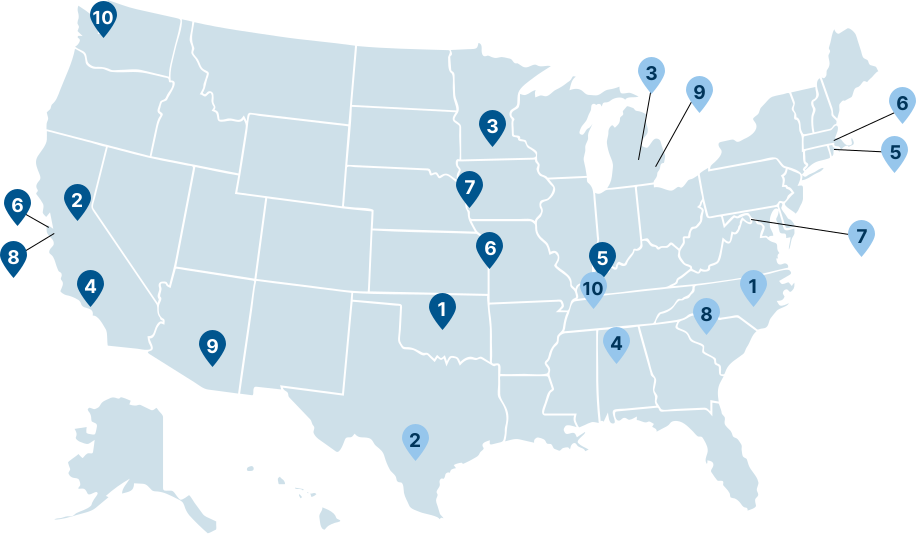
Metro areas with the highest compensation
| Metro area | Average compensation |
|---|---|
| 1. Oklahoma City, OK | $495,617 |
| 2. Sacramento, CA | $484,817 |
| 3. Rochester, MN | $478,861 |
| 4. Los Angeles, CA | $469,047 |
| 5. Louisville, KY | $465,924 |
| 6. San Francisco, CA | $462,806 |
| 7. Omaha, NE | $460,973 |
| 8. San Jose, CA | $459,691 |
| 9. Phoenix, AZ | $458,686 |
| 10. Seattle, WA | $456,523 |
Metro areas with the lowest compensation
| Metro area | Average compensation |
|---|---|
| 1. Durham-Chapel Hill, NC | $381,424 |
| 2. San Antonio, TX | $384,329 |
| 3. Ann Arbor, MI | $385,135 |
| 4. Birmingham, AL | $390,472 |
| 5. Providence, RI | $390,998 |
| 6. Boston, MA | $394,518 |
| 7. Baltimore, MD | $394,641 |
| 8. Greenville, SC | $399,026 |
| 9. Detroit, MI | $400,393 |
| 10. Nashville, TN | $400,548 |
Pay rankings after cost of living
Oklahoma City takes the top spot after cost-of-living adjustment
Cost of living continues to be a major factor for physicians' real income.3, 4 Oklahoma City rose to the No. 1 position this year for highest compensation adjusted for cost of living, swapping places with Rochester, MN. Several metro areas, including Indianapolis, Milwaukee, Memphis, and Virginia Beach, landed in the top 10 this year due to a combination of relatively affordable living costs and increasing physician pay in those areas.
Metro areas with the lowest adjusted compensation remain predominantly concentrated along the East and West Coasts. Boston and Washington, DC topped this list for the third year in a row, joined by cities like Baltimore, Denver, and San Francisco, where higher living expenses continue to erode physician earning power despite nominal pay increases.
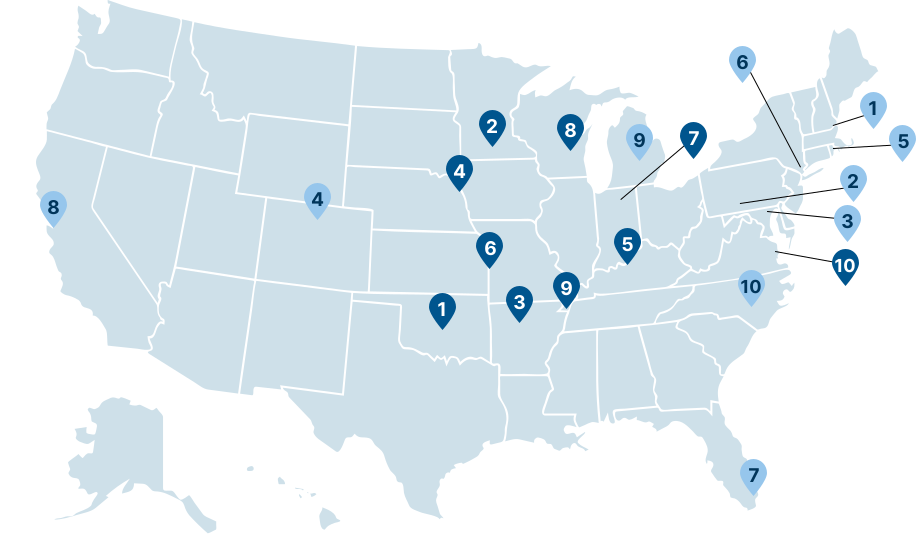
Highest average compensation adjusted for cost of living
| Metro area |
|---|
| 1. Oklahoma City, OK |
| 2. Rochester, MN |
| 3. Little Rock, AR |
| 4. Omaha, NE |
| 5. Louisville, KY |
| 6. Kansas City, MO |
| 7. Indianapolis, IN |
| 8. Milwaukee, WI |
| 9. Memphis, TN |
| 10. Virginia Beach, VA |
Lowest average compensation adjusted for cost of living
| Metro area |
|---|
| 1. Boston, MA |
| 2. Washington, DC |
| 3. Baltimore, MD |
| 4. Denver, CO |
| 5. Providence, RI |
| 6. New York, NY |
| 7. Miami, FL |
| 8. San Francisco, CA |
| 9. Ann Arbor, MI |
| 10. Durham-Chapel Hill, NC |
Compensation growth by metro area
Two-thirds of metro areas saw compensation go up
Average physician compensation went up in 41 out of the 60 metropolitan areas examined, with more than half seeing growth of at least 3%. The strongest growth was spread across the U.S., with all four major regions represented in the top 10 highest growth metro areas.
All of the top 10 metro areas with the highest growth were new to the list.
Specialty and practice setting
Compensation by specialty
Adult surgical and procedural specialties forge ahead in average compensation
The 20 specialties with the HIGHEST average annual compensation tend to be surgical and procedural specialties
The 20 specialties with the LOWEST average annual compensation tend to be pediatric and primary care specialties
Compensation growth by specialty
Interventional radiology, neurosurgery hit double-digit growth
Average annual compensation rose for nearly all specialties in 2025, led by interventional radiology and neurosurgery.
Each of the top 10 specialties with the largest increase reported annual growth rates exceeding 6%. These specialties mainly include a combination of surgical and procedural specialties as well as specialists like pathology. Only one primary care specialty made it into the list.
Many of the specialties in the top 10 for growth also have the highest average compensation, which may reflect a widening gap between specialties with the highest and lowest compensation this year.
The only specialty that appears in the top 10 for compensation growth in both 2024 and 2025 is radiology.
The top 10 specialties with the largest increase in average annual compensation
| Specialty | Compensation Growth | Average Compensation |
|---|---|---|
| 1. Interventional Radiology | 10.8% | $634,658 |
| 2. Neurosurgery | 10.7% | $829,161 |
| 3. Pathology | 9.8% | $410,039 |
| 4. Allergy & Immunology | 8.8% | $335,978 |
| 5. Thoracic Surgery | 8.7% | $749,707 |
| 6. Ob/Gyn | 8.0% | $420,859 |
| 7. Medicine/Pediatrics | 7.9% | $319,995 |
| 8. Child Neurology | 6.9% | $309,593 |
| 9. Radiology | 6.6% | $609,684 |
| 10. Endocrinology | 6.6% | $309,782 |
Compensation gap between primary care and other specialties
The percent pay gap between primary care physicians and specialists strong show signs of widening, running counter to the modest but consistent decline in the prior three years.5 In 2025, compensation for surgical specialists was 90.1% higher than it was for primary care physicians, up from 87.3% in 2024.
Emergency medicine physicians and ob/gyns also saw relatively larger increases to their compensation than did primary care physicians. Non-surgical specialists continued to earn significantly more than primary care physicians, though the gap narrowed slightly to 38.8%, down from 41.7% in the prior year.
Average physician compensation by specialty type (2022-2025)
(+% = Amount earned over primary care compensation)
Compensation by employment setting
Single specialty, multi-specialty groups stay on top
Physician compensation continued to vary widely across practice settings, led by single-specialty and multi-specialty groups. Solo practice dropped two spots to fifth highest in compensation, with the largest dip in year-over-year compensation (-3.8%) across all practice settings. Government compensation remained at the bottom, while urgent care centers saw the highest growth for the second year in a row.
Physician compensation by practice setting
| Practice setting | Average compensation |
|---|---|
| Single Specialty Group | $480,961 |
| Multi-Specialty Group | $477,033 |
| Hospital | $454,440 |
| Health System / IDN / ACO | $451,233 |
| Solo Practice | $440,424 |
| Health Maintenance Organization | $419,170 |
| Industry | $413,196 |
| Academic | $389,591 |
| Hospital / System - Ambulatory | $382,916 |
| Urgent Care Center / Chain | $326,447 |
| Government | $311,502 |
Gender pay gap
Physician gender pay gap
Gender pay gap stagnates at 26%
The gender pay gap for physicians remained at 26% in 2025, the same percentage it was in 2024 and up from a gap of 23% in 2023. Nominal average compensation was $122,276 higher for men than women in 2025, based on model-adjusted compensation estimates that account for factors including specialty, location, and years of experience. This represents a slight increase from 2024, when it was $120,917 higher for men than women.
The persistence of the gender pay gap in 2025 may in part stem from the higher growth seen in surgical specialties that tend to be dominated by men.6, 7 An analysis of Doximity physician compensation data from 2014-2019 estimated that, on average, men make over $2 million more than women over the course of a 40-year career.8
Physician average annual compensation
Physician gender pay gap by specialty
Men report higher compensation than women across all specialties
Consistent with prior years, physician average compensation was lower for women than men across all specialties examined in 2025. The percentage wage gap was 10% or higher in all specialties, with the exception of pediatric cardiology.
Thoracic surgery had the largest gender pay gap as a percentage of pay at 19.7%. The specialty was also among the top 10 in total compensation and compensation growth. In contrast, pediatric cardiology had the smallest gender pay gap (8.7%), followed by radiology (10%).
Medical specialties with the largest pay gaps in 2026
Medical specialties with the smallest pay gaps in 2026
Physicians and AI
AI's effect on physicians' day-to-day work
AI's effect on physicians' day-to-day work
Most (66%) of the physicians surveyed reported using AI on a daily or weekly basis as part of their clinical or administrative work. Frequency of AI use tended to be highest among non-surgical specialists, with use generally decreasing with age. Nearly three-fourths (73%) of physicians in their 30s said they use AI at least weekly, compared with 66% in their 40s, 59% in their 50s, and 52% in their 60s.
Younger physicians were not only more likely to use AI daily or weekly, but also more likely to report that the technology is reducing their workload. Roughly a fourth (26%) of physicians in their 30s said that AI is reducing their workload, compared with 19% in their 40s and 50s, and 14% in their 60s.
Despite these differences, most (72%) physicians said that AI is not changing the physician's role in their specialty, regardless of age. Though 50% acknowledged that AI is changing how work in their specialty is done.
Physician use of AI and AI's impact on workload by age
AI's effect on physician compensation
Physicians expect to share in financial benefits of AI
As physicians use AI for more clinical and administrative work, some see room for their own compensation to grow alongside it.9, 10More than a third (36%) of physicians surveyed said that physician compensation for a service should change if AI substantially reduces their time or effort for that service—though 43% said compensation should stay the same.
In addition, when asked who should primarily benefit financially if AI allows physicians to complete more clinical work in the same amount of time, 44% said that it should be physicians. The percentage rises to 50% among primary care physicians and falls to 40% among non-surgical specialists.
If AI allows physicians to complete more clinical work in the same amount of time, who should primarily benefit financially?
AI and future physician demand
AI appears likely to increase physician demand
With AI's role in medicine on the rise, there appears to be early signs that expectations for physician productivity are shifting. A fifth (20%) of physicians said that they have already faced higher expectations for productivity. This percentage was slightly higher among women (23%) than men (18%).
AI could also be shifting demand for physicians to varying degrees in different specialties. Though most physicians (66%) said that AI would not affect demand in their specialty over the next three years, almost 19% said it would increase demand while 16% said it would decrease demand. Surgeons were more likely to expect demand in their specialty to go up (19% increase versus 10% decrease) than primary care physicians were (17% increase versus 20% decrease).
Have you faced higher or lower expectations for productivity because of AI?
Over the next three years, do you expect AI to affect demand for physicians in your specialty?
AI and physician job security
For most physicians, AI has not shaken job security
Most physicians (78%) reported that the growing role of AI in medicine has either increased their sense of job security or not changed it at all. This trend generally increased with age, potentially reflecting the experience that physicians gain over time with both using new technologies and understanding how they impact job security. For example, only 55% of physicians under 30 said AI has increased or not changed their sense of job security, compared with 75% or higher for other age groups.
Surgeons were also more likely to report a higher or unchanged sense of job security with AI than primary care physicians or non-surgical specialists were. Nonetheless, the majority of physicians across all ages, specialties, and genders surveyed reported a sustained or elevated sense of job security with AI.
Has your sense of job security changed in light of the growing role of AI in medicine?
% of physicians who said their sense of job security has increased or stayed the same
By age
By specialty
AI's effect on physicians' earnings and career growth
Most physicians believe staying current with AI will give them an earnings advantage
Almost a fourth (23%) of physicians surveyed said that they expect the growing role of AI to increase their total compensation within the next 12 months.
And most physicians expect that those who stay up to date with AI will benefit the most. To be specific, 67% said that physicians who stay current with AI tools will have a meaningful earnings advantage over colleagues who don't adopt them during the next 12 months. And in general, physicians in specialties that reported using AI more frequently were also more likely to say that AI would give them a financial edge.
For example, primary care physicians were more likely than surgeons to report using AI (66% versus 58%) and also more likely to say that staying current would give them an earnings advantage (67% versus 55%).
Beyond pay, AI also seems to be gaining a foothold in hiring and promotion decisions. At least 39% of physicians surveyed said that AI proficiency is a factor in hiring and promotion decisions for their specialty, including 15% who described it as either a "major" or "moderate" factor.
Physician AI use and impact on earnings
Is AI proficiency a factor in your specialty's hiring and promotion decisions?
Physician shortage, demand, and overwork
Physician shortage
Physician shortage trends down, though its negative effects are still relevant
In a recent brief, the U.S. Health Resources and Services Administration projected a shortage of 141,160 full-time equivalent physicians in the country by 2038, with shortages in 30 out of the 35 medical specialties examined.11
The vast majority of physicians (85%) surveyed reported that the physician shortage has already affected their clinical practice. Most of the physicians (76%) also reported that, in the past 12 months, the shortage and other systemic pressures have compromised the quality of care they provided. This has contributed to downstream consequences for patients: 71% of physicians reported longer patient wait times, 61% reported diminished patient access to health care services or delayed treatment or medical intervention, and 56% reported increased patient frustration or anger.
Still, Doximity surveys over the past three years point to early signs that the shortage could be reversing course. About 18% of physicians described the impact as "severe" this year, compared with 21% in 2025 and 30% in 2024. And a lower percentage of physicians reported experiencing negative effects this year than in prior years. For example, 52% of physicians reported overwork or burnout due to the shortage, compared with 63% in 2025 and 67% in 2024.
Which of the following have you personally experienced as a result of the physician shortage?†
† Respondents selected all that applied
How would you describe the impact of the physician shortage in your clinical practice?
Impact of overwork on physician career plans
Overwork drives up interest in early retirement
While shortage-driven strain has eased over the past three years, physicians' overall workload remains high, driven by pressures that extend well beyond staffing levels.12, 13 The vast majority of physicians (82%) reported they are overworked in a Doximity poll of more than 600 physicians conducted in June 2026. This continues the trend observed over the past several years in a series of Doximity polls covering thousands of physicians: 85% reported being overworked in 2025, 81% in 2023, 86% in 2022, and 73% in 2021.
In response to being overworked, 66% of physicians reported that they are considering a career change. That figure includes 46% who said they are now considering early retirement, a substantial increase from 34% the prior year. Due in part to factors such as overwork and workforce shortages, roughly half of physicians reported feeling one or more symptoms of burnout between 2011 and 2023, according to a multiyear report published in Mayo Clinic Proceedings.
How has your clinical workload altered your career plans?*
Polls series of thousands of physicians in 2021–2026
*Due to rounding, numbers may not sum to 100%
Importance of autonomy and work-life balance
Physicians still willing to accept lower pay for more autonomy, work-life balance
About three out of four physicians (76%) said they are willing to accept lower pay if it would result in greater autonomy or work-life balance, according to a Doximity poll of nearly 1,000 physicians conducted in July 2026. This appears to be a consistent trend over the past four years: 77% reported they would be willing to accept, or have already accepted, lower compensation to achieve more autonomy or work-life balance in 2025, 75% in 2024, and 71% in 2023.
The preference to prioritize autonomy or work-life balance was higher for women physicians (86% of women respondents) than men physicians (71%)—a gap that has slightly widened compared with the prior year.
Percentage of physicians who have accepted, or would accept, lower compensation for more autonomy or work-life balance
Relocating or leaving clinical practice
Almost half of physicians say they are likely to leave clinical practice
Concerned over factors such as workforce shortages, overwork, and stagnant compensation, a significant share of physicians have signaled that they are ready for a change. Close to half (44%) of physicians surveyed said they are "somewhat" or "very" likely to leave clinical practice entirely within the next two years. And three-fourths said they are open to relocating should the right opportunity come along.
In addition, nearly two-thirds of physicians (63%) would not want their children to pursue a career in medicine, according to a 2024 Doximity poll of 7,590 physicians.
Despite these headwinds, the vast majority (81%) of physicians said they would still pursue a career as a physician if they had a chance to do it over again. Most (55%) would also choose to stay in the same specialty.
How likely are you to leave clinical practice entirely within the next two years?
If you had the chance to do it over again, would you still pursue a career as a physician?
Physician demand by specialty
Primary care specialties in high demand
Amid concerns over an overstretched physician workforce, demand remains high across many medical specialties. The specialties that saw the highest demand in 2025 were predominantly primary care specialties, based on an analysis of tens of thousands of job postings across the Doximity network in 2025.
Three out of the four most recruited specialties were internal medicine, family medicine, and pediatrics. This high demand for primary care aligns with longstanding concerns over an anticipated shortage of 70,610 full-time equivalent primary care physicians by 2038, according to the U.S. Health Resources and Services Administration.14
Top 10 specialties based on demand
| Specialty |
|---|
| 1. Internal Medicine |
| 2. Family Medicine |
| 3. Psychiatry |
| 4. Obstetrics & Gynecology |
| 5. Pediatrics |
| 6. Emergency Medicine |
| 7. Radiology |
| 8. Neurology |
| 9. Anesthesiology |
| 10. Cardiology |
Rise of locum tenens
Internal medicine, Ob/Gyn see highest demand for locum tenens work
Beyond full-time work, locum tenens is an increasingly popular way for physicians to supplement their income or to practice with the benefits of reduced hours and more flexibility.
Based on data from Doximity Talent Solutions, which supports both permanent and locum tenens staffing, the two specialties with the greatest demand for locum tenens work in 2025 were internal medicine and ob/gyn. The remainder of the top 10 most in-demand locums specialties included a mix of surgical and non-surgical specialties.
Top 10 most in-demand locums specialties
| Specialty |
|---|
| 1. Internal Medicine |
| 2. Obstetrics & Gynecology |
| 3. Family Medicine |
| 4. Anesthesiology |
| 5. Radiology |
| 6. Emergency Medicine |
| 7. Gastroenterology |
| 8. Cardiology |
| 9. Oncology |
| 10. Pediatrics |
Conclusion
Physicians today are navigating a profession defined by transition. Workforce shortages, overwork, shifting reimbursement, and the rapid adoption of AI are all reshaping how physicians practice and plan their careers. Compensation rose 2% this year, but the more telling story is how physicians are absorbing these pressures while staying focused on patient care.
There are early signs of progress. Fewer physicians described the shortage's impact as severe, and reported burnout has eased from its recent peak. Yet the strain remains real: most physicians still report being overworked, a growing share are considering early retirement, and nearly half say they may leave clinical practice within two years.
Even so, the commitment endures. The vast majority of physicians said that if given the chance to do it over again, they would still choose medicine, and most would stay in the same specialty. That resilience is the throughline of this report.
Looking ahead, the next set of questions centers on AI. Can it extend the reach of the physician workforce enough to narrow the projected shortage? Which specialties stand to benefit most, and how will demand and compensation evolve? And as AI fluency becomes increasingly important in hiring and career advancement, will it emerge as a new form of professional currency?
These questions are significant enough to warrant a deeper examination. They will be the focus of a forthcoming Doximity report dedicated to AI in medicine.
Building a healthier, more sustainable future will take more than physician dedication alone. It will require meaningful collaboration across the entire healthcare ecosystem, including health systems, hospitals, payors, and policymakers.
Physicians must not only have a voice in shaping the future of medicine, they must have a seat at the table.
Methodology and sources
Methodology
This study by Doximity was drawn from nearly 23,000 physician compensation surveys completed between January and December 2025, with data from over 250,000 completed surveys over the last seven years. Each survey was completed by full-time U.S. physicians who practice at least 40 hours per week. Responses were mapped across metropolitan statistical areas, and 60 of the top-represented MSAs were included in the analysis. To control for differences in specialty, geography, and other provider-specific factors, we estimated a multivariate regression with controls for medical specialty, metro area, and gender. We also controlled for how long each clinician has practiced medicine and their self-reported average hours worked per week.
Cost of Living Adjustment
This analysis used the 2024 regional price parities of metro state areas published by the Bureau of Economic Analysis. The price parities are publicly available in the February 19, 2026 release on the BEA website.
Physician Compensation and AI Survey
Doximity conducted a survey of its physician membership via SurveyMonkey in June 2026 about their career and compensation satisfaction as well the impact of AI on their work and pay. The survey was completed by more than 1,400 U.S. physicians across a broad range of medical specialties. Survey participant demographics are not population-based. Therefore, findings may not be able to be extrapolated to the broader physician population.
Physician Demand by Specialty and Rise of Locum Tenens
The findings are based on tens of thousands of unique jobs posted on the Doximity network between January 1 and December 31, 2025. The job postings originated from Doximity’s Talent Solutions, which supports both permanent and locum tenens staffing.
Physician Overwork Poll
Doximity’s findings are based on a poll run on the Doximity Newsfeed in June 2026. More than 600 U.S. physicians responded to the poll.
The poll asked the following question: “How has your clinical workload altered your career plans?”
The poll offered the following five answer options:
- “Because of overwork, I’m looking for another employer.”
- “Because of overwork, I’m looking at another career.”
- “Because of overwork, I’m considering early retirement.”
- “I am overworked, but not looking to change my employer.”
- “I am not overworked.”
Autonomy and Work-Life Balance Poll
Doximity’s findings are based on a poll run on the Doximity Newsfeed in July 2026. Nearly 1,000 U.S. physicians responded.
The poll asked the following question: “Would you be willing to accept lower compensation to achieve more autonomy or work-life balance?”
The poll offered the following five answer options:
- “Yes, and I have already done so.”
- “Yes, I would consider it.”
- “No, probably not.”
- “No, definitely not.”
- “Unsure.”
References
- 1The Complexities of Physician Supply and Demand: Projections From 2021 to 2036. Association of American Medical Colleges.
- 2Medicare and Medicaid Programs; CY 2026 Payment Policies Under the Physician Fee Schedule and Other Changes to Part B Payment and Coverage Policies; Medicare Shared Savings Program Requirements; and Medicare Prescription Drug Inflation Rebate Program.
- 3Consumer Price Index: 2025 in Review. U.S. Bureau of Labor Statistics.
- 4Updated AMA analysis: Medicare Physician Payment Continues to Lag. American Medical Association.
- 5Faber DA, Joshi S, Ebell MH. US Residency Competitiveness, Future Salary, and Burnout in Primary Care vs Specialty Fields. JAMA Internal Medicine. 2016;176(10):1561-1563.
- 6Pelley E, Carnes M. When a Specialty Becomes “Women’s Work”: Trends in and Implications of Specialty Gender Segregation in Medicine. Academic Medicine. 2020 Oct;95(10):1499–1506.
- 7Andrews JS, Matthews C, Kolli SK. Graduate Medical Education, 2024-2025. 2025;334(17):1572-1598.
- 8Whaley CM, Koo T, Arora VM, Ganguli I, Gross N, Jena AB. Female Physicians Earn An Estimated $2 Million Less Than Male Physicians Over A Simulated 40-Year Career. Health Affairs. 2021 Dec;40(12):1856-1864.
- 9How Could Artificial Intelligence Affect Physician Payment For Nonprocedural Services? (Part 1). Health Affairs.
- 10How Could Artificial Intelligence Affect Physician Payment For Nonprocedural Services? (Part 2). Health Affairs.
- 11Physician Workforce: Projections, 2022-2037. November 2024. U.S. Health Resources and Services Administration.
- 12Shanafelt TD, West CP, Sinsky C, Trockel M, Tutty M, Wang H, Carlasare LE, Dyrbye LN. Changes in Burnout and Satisfaction With Work–Life Integration in Physicians and the General US Working Population Between 2011 and 2023. Mayo Clinic Proceedings. 2025 Jul;100(7):1142-1158.
- 13Addressing Health Worker Burnout: The U.S. Surgeon General’s Advisory on Building a Thriving Health Workforce. 2022.
- 14Workforce Projections. Health Resources and Services Administration.
About Doximity
Built for medicine.
Doximity is the leading clinical AI company with the largest network of U.S. clinicians. Doximity’s AI-powered workflow platform is trusted by over 85% of U.S. physicians and 300+ health systems. Doximity's mission is to help clinicians be more productive so they can provide better care for their patients.
We are building the platform that combines AI, intelligent workflows, and the power of the physician network to help physicians practice medicine at their best.
To learn more, visit www.doximity.com.